Play’s emotionally stirring content makes powerful impact on audience at Arts Council of Pakistan, Karachi
KARACHI:
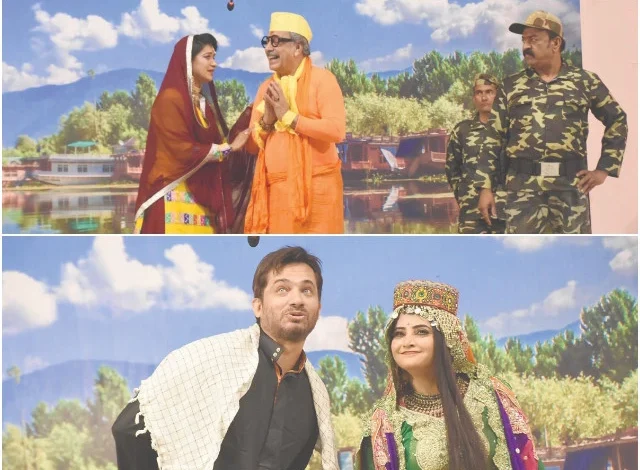
The ongoing Awami Theatre Festival at the Arts Council of Pakistan Karachi delivered one of its most powerful and emotionally stirring performances on its 16th day with the presentation of the stage play “Dukhtar-e-Kashmir”, staged in connection with Kashmir Solidarity Day.
Written by renowned playwright Bashir Saddozai and directed by Adam Rathore, the play emerged as the highlight of the festival, drawing an overwhelming response from the audience.The ensemble cast of Shanzay, Warda, Ajnabi, Sapna Ghazal, Nadeem Malik, Shehzad Malik, Ilyas Nadeem, Shareef Baloch, Abdullah Lala, Kamal Idrees, Manzoor Malik, Mehak Noor, Shahina, and Javed Qureshi delivered compelling performances, earning thunderous applause and heartfelt appreciation from spectators.
“Dukhtar-e-Kashmir” was not merely a theatrical presentation but a powerful living testimony of a history that has long been suppressed. By staging this play on the occasion of Kashmir Solidarity Day, Bashir Saddozai conveyed a strong and unambiguous message that the people of Pakistan – especially its artists – stand united with the people of Jammu and Kashmir in their ongoing struggle for freedom.
The production transcended the boundaries of entertainment and literature, presenting a clear intellectual and political narrative while serving as a potent expression of solidarity with the Kashmiri people. The play traced the prolonged struggle for the right to self-determination, rooted in a history that predates the partition of the subcontinent.
It underscored the idea that despite the countless sacrifices already made by the people of Jammu and Kashmir, the path ahead may demand even greater sacrifices – yet retreat is no longer an option.
The narrative highlighted the political and resistance roles of figures such as Sheikh Abdullah, Syed Ali Geelani, Yasin Malik, and Asiya Andrabi, while also shedding light on alleged conspiracies of the Modi government concerning Kashmiri Pandits.
Through intense and emotionally charged scenes, the play portrayed the harsh realities of life in occupied Jammu and Kashmir, including enforced disappearances, extrajudicial killings, pellet gun injuries that have blinded countless innocents, and the unending anguish of grieving mothers.
Yet, “Dukhtar-e-Kashmir” was not solely a chronicle of suffering; it was equally a story of resistance, resilience, and hope – a hope that continues to live on in every Kashmiri household. In the play, womanhood was portrayed not simply as a character but as a powerful symbol of the entire Kashmiri nation.
The Kashmiri woman emerged as a daughter, a mother, and a sister – someone whose existence has been targeted most brutally, yet who stands as the strongest emblem of resistance.
At a time when Kashmir is often reduced to a mere “dispute” in global media, this theatrical production made a sincere effort to restore human faces to the narrative, reminding audiences that Kashmir is not just a line on a map, but a land of living people with dreams, fears, and enduring hopes.
The play ultimately reaffirmed the belief that when art aligns itself with truth, it becomes the most powerful form of protest.
The open-air theatre was filled to capacity, and audiences responded with sustained applause, paying rich tribute to the outstanding performances and the profound message of ‘Dukhtar-e-Kashmir.’