Ayesha Omar says filming in historic neighbourhood reveals a community far warmer and more welcoming than its long-sta
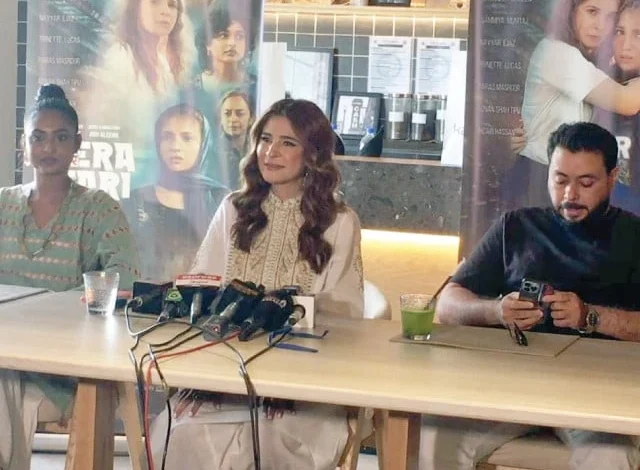
Ayesha Omar speaks durring a promotional event for ‘Mera Lyari’ in Karachi. photo: express
KARACHI:
The story of Lyari has often been told through police reports, political flashpoints and grim television footage, but the team behind ‘Mera Lyari’ says their film seeks to present a side of the historic Karachi neighbourhood rarely shown on screen – one filled with warmth, sport, humour and an enduring sense of community.
Speaking at a promotional event in Karachi, actor Ayesha Omar described her experience of filming in Lyari as transformative, describing the neighbourhood as far more welcoming and vibrant than its public image suggests.
“I never felt fear in Lyari,” she told attendees at a special ‘meet-and-greet’ event in Karachi, recalling months spent working in the locality without security. “Media and public perception had created a very different image of Lyari,” she said. “Reality turned out to be much better.”
The event brought together the film’s lead cast, producers and crew members ahead of the movie’s premiere on May 9. Speaking to attendees, Omar reflected on the experience of filming in Lyari and said working in the area had completely transformed her perception of the locality.
Omar revealed that she regularly travelled to Lyari during filming and never felt unsafe at any point during the production process. “I did not even keep security with me,” she said, adding that the people there were “extremely loving and full of life”.
The actor said the film was shot under intense weather conditions, with production continuing through Karachi’s summer months. “The shooting was done in severe heat, which made it very difficult to continue working,” she said. Despite the challenges, Omar expressed excitement over the film’s upcoming release in Pakistan.
The production, which began filming in May and continued until July, also incorporates Lyari’s football culture into its storyline. Omar noted that the football team featured in the film consisted of real young men from the area, adding authenticity to the project.
Referring indirectly to Indian portrayals of similar communities, Omar said she had previously watched a film she found “so unrealistic” that she stopped watching it halfway through. By contrast, she said ‘Mera Lyari’ gave her an opportunity to experience “the real life and people of Lyari” firsthand.
She also disclosed that the project underwent several creative changes during development. According to Omar, the film’s initial draft had been completed last year and was originally titled ‘Behnaz’ before later being renamed ‘Mera Lyari’.
The actor praised the Sindh government for supporting the production through grants and institutional backing. “The government did not create any obstacles,” she said, adding that official departments had also launched promotional campaigns for the film on social media.
Producer Waqar Rizvi highlighted Lyari’s sporting culture, revealing that the area currently has 36 football grounds. He said girls use the grounds in the mornings while boys play in the evenings. Rizvi added that plans are also under way to build three additional football stadiums in the neighbourhood.
Omar also spoke about women’s safety within the entertainment industry, saying she makes a conscious effort to ensure female crew members on her sets feel secure and protected from harassment or discomfort.
Earlier this week, actor and lead of ‘Mera Lyari’, Dananeer Mobeen, attended the film screening at the UK Asian Film Festival in London, where she emphasised that the it was not a response to Indian movie ‘Dhurandhar’, but is instead an inspiring portrayal of Lyari and its multicultural themes.
“It’s a disservice to boil this movie down to a response to another film. The core and crux of this movie is so special. There are so many themes that we have explored in this film. We have explored Lyari, football culture, female football culture, women in sports, South Asian women in sports,” she told reporters.
The actor also noted that the film’s layered storytelling should not be viewed from a single angle: “There are so many layers in this story so to see it from this angle, I think will be a disservice.” Dananeer added, “We should see this film through a bird-eye view and keep all the themes in mind.”
Urging audiences to view the film holistically, Dananeer stated: “It’s a beautiful film. It was a beautiful image of Lyari, all the women we have shown and what we have seen over there. You will have to see it in the film.”