Meeting deliberates on ways to ensure support measures directed at vulnerable segments, subsidy delivery mechanisms
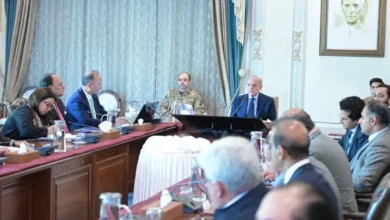
Finance Minister Muhammad Aurangzeb chairs a high-level meeting on petroleum prices and targeted subsidy modalities, attended by federal and provincial leadership. Photo: X
The federal and provincial governments on Tuesday agreed on a working framework outlining the broad contours of a possible targeted subsidy mechanism, as part of efforts to develop a coordinated and sustainable approach to petroleum pricing and subsidy reforms.
The understanding was reached at a high-level meeting held at the Finance Division under the chairmanship of Finance Minister Muhammad Aurangzeb, with participation from the top political leadership of the provinces.
“It was agreed that a working framework outlining the broad contours of a possible targeted subsidy mechanism will be developed and shared with all stakeholders for further input. The provinces will continue to refine their proposals in light of the discussions, with a view to reaching a consensus-based and practical solution,” said a press release from the finance ministry.
In his opening remarks, the finance minister said the meeting was a continuation of ongoing consultations initiated under the guidance of the country’s top leadership to evolve a coordinated strategy for petroleum pricing and subsidy reforms. He stressed the importance of collaborative decision-making and close coordination between the federation and the provinces.
Read: Federal, provincial governments agree on tech-based fuel subsidy framework
The participants held a detailed discussion on moving away from generalised subsidy regimes towards more targeted and efficient support mechanisms. Provincial representatives shared various proposals and perspectives, reflecting their administrative capacities, data availability and socioeconomic considerations.
Federal, Provincial Leadership Deliberate on Petroleum Pricing and Targeted Subsidies
A high-level meeting involving the Federal Government and the top political leadership of the provinces on petroleum prices and targeted subsidy modalities was held today at the Finance… pic.twitter.com/g9GX3dtUC9
— Ministry of Finance, Government of Pakistan (@Financegovpk) March 31, 2026
The meeting deliberated on ways to ensure that support measures were directed at vulnerable segments of society while maintaining fiscal discipline and minimising market distortions. Possible mechanisms for subsidy delivery, including the use of existing databases, digital platforms and cash transfer systems, were also discussed.
Emphasis was laid on ensuring transparency, accountability and effective governance structures in designing and implementing future subsidy arrangements. Participants also highlighted the need for a coordinated national approach, alongside flexibility for provinces in execution.
Aurangzeb appreciated the constructive engagement of participants and reiterated the government’s commitment to protecting vulnerable groups while ensuring economic stability.
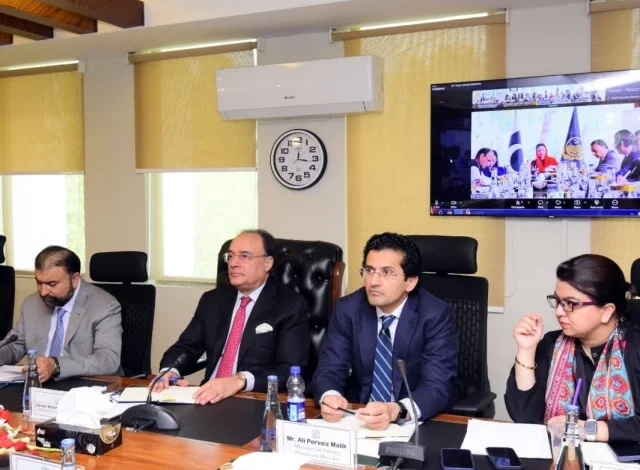
The meeting was attended by the chief ministers of all four provinces, chief secretaries (virtually), Minister for Petroleum Ali Pervaiz Malik, Minister for Economic Affairs Ahad Cheema, Minister for Information Technology and Telecommunication Shaza Fatima Khawaja, along with federal secretaries of finance, petroleum, and IT and telecom, and senior officials from relevant ministries, divisions and regulatory authorities.
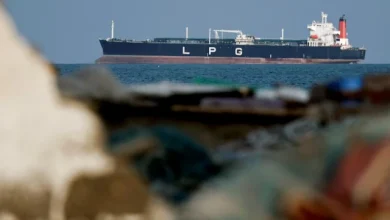
Earlier this month, the government sharply increased diesel and petrol prices by Rs55 per litre, or 20%, citing the ongoing US-Israel and Iran conflict, which has disrupted global supply chains and pushed crude oil prices to a two-year high.
In response to the crisis, both the federal and provincial governments had introduced a series of austerity measures, including an additional weekly holiday, a reduction in free petrol allocations for ministers, curbs on protocol vehicles, and proposals to provide subsidised fuel for students.
Last week, the government had also approved a significant increase of Rs200 per litre in the fuel levy on high-octane fuel used in luxury vehicles, raising the total levy to Rs300 per litre and the price to Rs600 per litre.
Although it had been expected that the government might further increase petroleum prices due to prevailing uncertainty, it had refrained from doing so on two occasions, stating that Rs125 billion had been allocated through savings and development budget cuts to cushion consumers against rising global oil prices.
The federal government and provinces had also agreed to implement a targeted fuel subsidy framework leveraging technology, with an emphasis on transparency, efficient delivery and the promotion of fuel conservation through behavioural measures.