Undocumented household gold could strengthen reserves, broaden tax base and reduce external vulnerability
KARACHI:
Here is an out-of-the-box economic policy action. Across Pakistan and global financial markets, gold and silver have once again become the centre of investor attention.
The recent surge in prices is not driven by speculation alone, but by a convergence of structural forces reshaping global finance. Unprecedented monetary expansion since Covid has diluted fiat currencies, while the Japanese yen has steadily lost its historical safe-haven status. Simultaneously, rising US fiscal stress, fears of dollar weaponisation, and the prospect of competitive devaluation of the Chinese yuan have added to global uncertainty.
Geopolitical risk has further accelerated this shift. From the Ukraine-Russia conflict and tensions in the South China Sea to the Thailand-Cambodia war and the increasing use of tariffs as economic weapons, uncertainty has become the new normal.
In such an environment, investors are reallocating away from speculative digital assets towards traditional stores of value. Gold is being rediscovered as monetary insurance, while silver is gaining renewed interest due to its growing industrial and energy-transition applications. This is not a price rally; it is a repricing of risk.
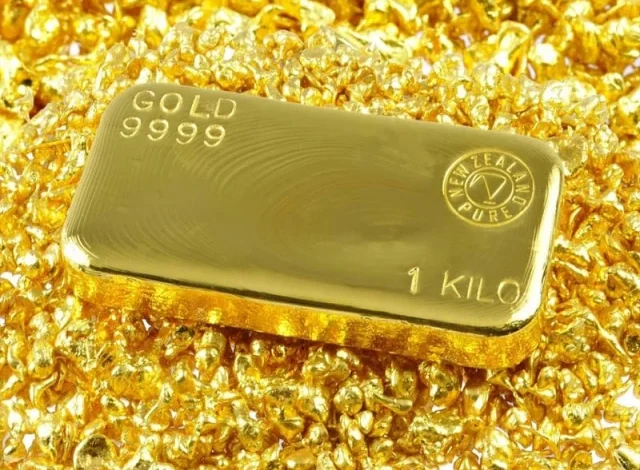
For Pakistan, this global shift carries direct relevance. According to reported estimates, the State Bank of Pakistan (SBP) holds roughly 64 tonnes of gold, which at a price of $5,000 per ounce is valued at nearly $10 billion. This is a striking figure when compared with Pakistan’s foreign exchange position, where SBP reserves stand at around $16 billion and commercial bank reserves at around $5 billion.
Gold alone accounts for a material share of national reserve strength. Central banks across the world continue to accumulate gold precisely for this reason. It offers insulation from dollar dependency, reduces exposure to geopolitical coercion, and enhances balance-sheet resilience.
The emergence of new trade arrangements and settlement mechanisms among major economies such as the European Union (EU), China, India and the United Kingdom (UK) underscores a broader global economic reset. Pakistan, too, must recognise that the old reserve playbook is quietly being rewritten.
The global system is changing; reserve strategy must change with it. Pakistan’s population of approximately 250 million translates into about 50 million households. If these households are divided into five equal income segments and conservative assumptions are made regarding gold ownership, the scale of domestic gold becomes evident. Assuming no gold in the bottom quintile and progressively higher holdings across income groups, household gold alone is valued at roughly $337 billion, equivalent to nearly 2,100 tonnes of gold. This figure is almost 30 times Pakistan’s official foreign exchange reserves.
Yet despite its scale, household gold remains largely invisible to the formal economy. As Ramazan approaches, many Pakistanis will pay Zakat on gold as a religious obligation, but beyond this, gold remains undocumented in nearly 95% of cases. It continues to function as the preferred store of wealth in the informal economy and a conduit for smuggling, corruption and illicit trade.
Undocumented wealth is not neutral; it distorts the entire system. Although Financial Action Task Force (FATF) conditions required better documentation of gold markets, enforcement has remained weak. Much like agriculture and wholesale trade, the gold economy has largely remained untouched, while salaried individuals, industry and the formal sector have borne the brunt of fiscal tightening under International Monetary Fund (IMF) programmes. This uneven burden has deepened mistrust and narrowed the formal tax base.
The current IMF programme restricts the government from offering tax amnesties, but this constraint will eventually expire. A carefully designed gold amnesty, even with limited participation, could generate meaningful fiscal benefits. A progressive tax of 5 to 15% on voluntarily declared gold could yield $1.5 to $4.5 billion in one-off revenues if just 10% of holders participate, while simultaneously broadening documentation.
Few policies convert black wealth into public strength so directly. More importantly, such a scheme need not absorb scarce cash or dollars. Taxes could be paid in physical gold, allowing SBP to permanently add 10 to 30 tonnes to its reserves under conservative assumptions.
Given that gold ownership is concentrated in upper-income households, participation could exceed expectations if credibility and confidentiality are assured. If an amnesty is politically or institutionally unfeasible, gold monetisation offers a safer and more sustainable path. By allowing households to deposit gold in certified vaults, earn modest returns, and receive gram-based credits, the state can formalise savings while retaining physical gold within official reserves. This would reduce smuggling, curb unofficial imports and strengthen the external account without coercion.
From under the pillow to the balance sheet
Several countries, including Indonesia, Turkey, India, Argentina, China, Italy and Kazakhstan, have experimented with variations of gold amnesty and monetisation schemes to strengthen reserves, raise revenues, improve compliance and curb illicit flows. While results have been mixed, the broader lesson is clear: gold can be transformed from dormant household wealth into a strategic national asset if policy design is credible and enforcement consistent.
If Pakistan is serious about sustaining growth beyond 5%, stabilising reserves, managing currency volatility and reducing external vulnerability, it cannot afford to ignore a $337 billion domestic gold stockpile. The metal is already there. What is missing is the policy imagination to make it work for the nation rather than outside it.
THE WRITER IS AN INDEPENDENT ECONOMIC ANALYST