Govt sends mixed signals on fuel price hike amid rise in international market

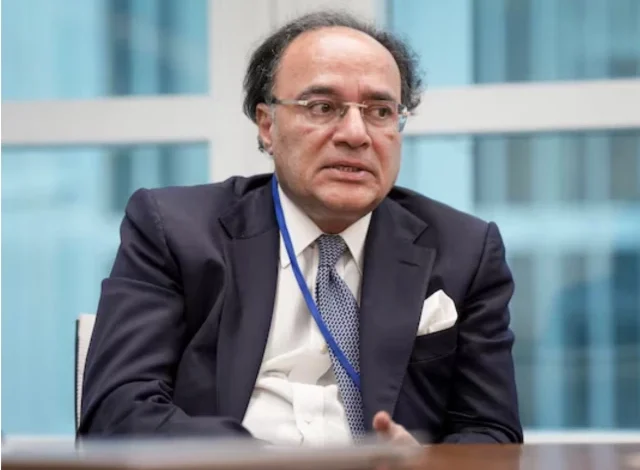
FinMin Aurangzeb says prices are rising, adds government will try to manage the situation
Finance Minister Muhammad Aurangzeb speaks during a Reuters interview at the 2025 annual IMF/World Bank Spring Meetings in Washington, DC, US, April 25, 2025. Photo: Reuters/ File
The government on Thursday gave mixed signals about further increase in fuel prices with Finance Minister Muhammad Aurangzeb saying that petroleum products’ “prices are on the rise” while the deputy minister reiterated Prime Minister’s Shehbaz Sharif’s statement that the prices may not be increased.
The contradictory statements about price increase were given during a meeting of the Senate Standing Committee on Finance. Senator Saleem Mandviwalla of the Pakistan People’s Party (PPP) chaired the committee meeting.
To a question by Senator Farooq Naek whether the prices were going to increase further, Aurangzeb said that “prices are on the rise” while adding that the government would try to manage the situation in the light of the prime minister’s instruction.
Read: OGRA dismisses reports of Rs73 petrol, Rs84 diesel hike as ‘completely baseless’
Last Friday, the government increased the petrol price by Rs55 per liter to a record Rs321 and diesel to Rs336. It also decided to determine the prices on a weekly basis due to the rapidly changing global supply and demand situation. The next determination is expected tomorrow (Friday).
Meanwhile, after electronic media aired the finance minister’s statement about the rise in prices, the ministry gave an explanation that the statement was in the context of the international market prices.
“I want to clarify the finance minister’s statement as the media is present in the meeting,” said Minister of State for Finance Bilal Azhar Kayani. Kayani said that the ministry stood by the premier’s statement and the government would try its best that no further burden was passed on to the consumers.
On Monday, PM Shehbaz had declared that his government would not further raise the prices for the end consumers and try to absorb any further increase.
The finance minister assured the committee that the government would carefully consider public interest while making any decisions. He added that efforts were being made to create a fiscal cushion through austerity measures to minimise the burden on citizens.
During the meeting, Petroleum Minister Ali Pervaiz Malik gave a detailed briefing on the supply and price situation to the committee.
The minister said that since Pakistan was in the International Monetary Fund programme, the government would try to navigate to the maximum extent possible, but maintained that any signal to the market that the government was wavering on its commitment on the price recovery of the imported oil could choke the supply situation.
Members raised concerns about increases in oil prices on existing stocks and sought clarity regarding beneficiaries of such adjustments. The committee urged the government to transparently explain market constraints before implementing price regulations.
Also Read: Govt to absorb future fuel price hikes amid Middle East crisis: Ali Pervaiz Malik
Malik said that oil price determination was done as per average Platts benchmark prices and there was no change in the price determination formulae. He also informed that the Strait of Hormuz was choked and vessels had to take a longer route while also highlighting the four time increase of premium and high insurance costs owing to conflict.
Kayani explained that the recent oil price hike was taken as a measure to protect the oil supply chain. He further elaborated that as per the existing mechanism, oil marketing companies (OMCs) get profit as well as losses on their stocks maintained.
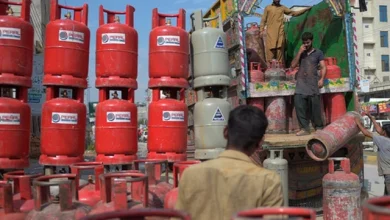
Malik informed the committee that the supply of LPG from Iran remained intact but explained that Pakistani ports were not capable of handling large crude oil vessels and the government was trying to ship the oil through small vessels. He said that there were also issues in securing insurance of the freight due to attacks on the ships.
Commenting on the prices, he said that there was extreme volatility in the prices, which fluctuated from $150 to $179 per barrel for the diesel. The premium on the diesel had also increased from $5 to $20 while the insurance cost had jumped from $700,000 to $7 million for a cargo, the minister said.
Malik said that LNG prices had shot up from $12 per mmbtu to $30 but the government was not going to increase the gas prices. At this price, one unit of electricity produced from the LNG fuel would cost Rs70, he said.
The committee chairman emphasised that in the event of rising energy costs, the government must ensure that the poorest segments of society were protected.
PEPs
The committee discussed the alleged misuse of politically exposed persons regulations, which members said was leading to undue harassment of parliamentarians, judges, senior officials and their associates.
The committee also reviewed the government’s contingency planning and preparedness measures to ensure supply stability amid the current escalating conflict situation.
The participants urged the central bank to rationalise the regulations that were creating undue hurdles for PEPs. “Any tinkering with the Anti-Money Laundering and Combatting of Financing of Terrorism regulations can create problems for Pakistan in the Financial Action Task Force (FATF),” said Dr Inayat Hussain, deputy governor of the central bank.
Dr Hussain said that the FATF’s next review of Pakistan was due in 2028 and Pakistan could not risk going back to the grey list.
But the committee members were of the view that the scope and scale of the regulations was beyond what the FATF had determined. The members raised serious concerns that the current framework was creating unnecessary hurdles in routine banking and business activities.
Read: India’s bid to isolate Pakistan at FATF fails
Senator Naek particularly questioned Regulation No. 5, which includes close associates and family members of parliamentarians, arguing that such provisions make it difficult for individuals to conduct normal financial transactions or even open bank accounts.
On this, the State Bank of Pakistan deputy governor informed the committee that the instructions were issued in line with requirements of the FATF. However, the committee noted that the broad and general nature of these instructions could create an environment detrimental to business activity.
Members also questioned the authority of the central bank to issue directives that could effectively override legislation passed by Parliament. The Committee emphasised that FATF regulations were primarily aimed at combatting terror financing and should not create unnecessary obstacles for legitimate businesses.
To address the issue, the chairman directed the constitution of a sub-committee to identify regulatory and operational gaps and propose solutions in consultation with all stakeholders, including scheduled banks, stressed that regulatory frameworks must not be misused and that no individual should face undue hardship in the name of compliance.